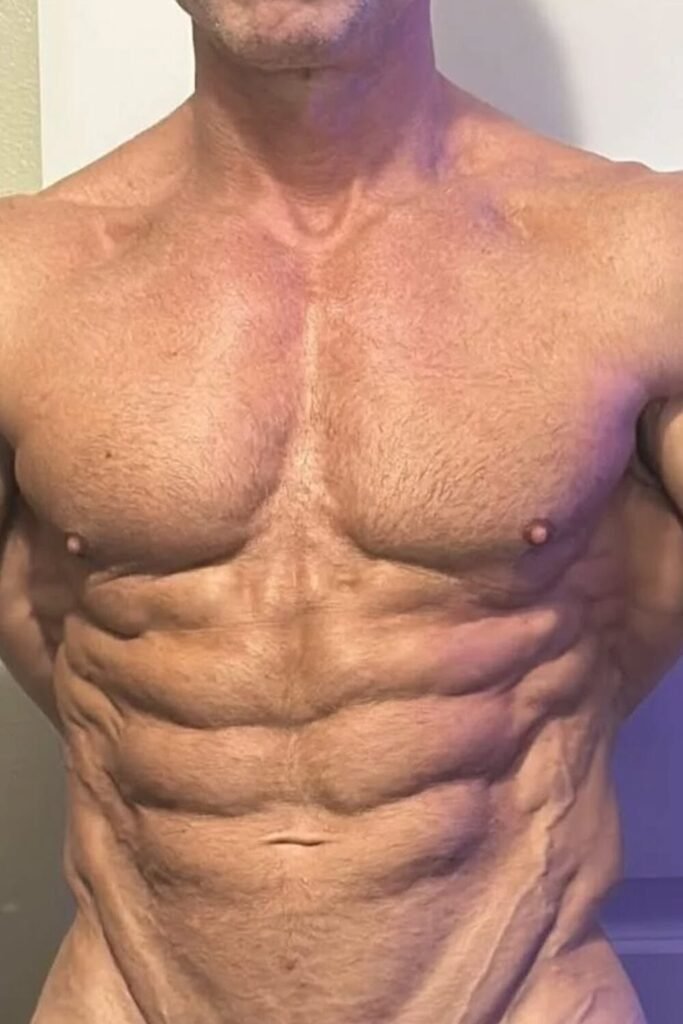
Maintaining a tight, athletic waistline is one of the biggest challenges for experienced bodybuilders. Age, digestion factors, and heavy spinal loading can lead to midsection thickness or abdominal distension.
Building a compact, strong core requires shifting away from heavy weighted crunches and focusing on transverse abdominis control through vacuums and anti-rotational exercises.
1. Train the Transverse Abdominis (The Internal Weight Belt)
The transverse abdominis (TVA) acts as a natural corset, holding the abdominal wall tight and supporting the lower back during heavy movements.
- Stomach Vacuums: Exhale all air from your lungs, pull your belly button inward toward your spine, and hold for 10-15 seconds. Perform 3-4 sets every morning on an empty stomach.
- Planks and Hollow Body Holds: Focus on active bracing rather than just holding time. Squeeze your glutes and pull your ribs down toward your hips.
2. Use Anti-Rotational Movements Instead of Heavy Crunches
Heavy weighted crunches thicken the rectus abdominis and can cause spinal flexion issues over time. Anti-rotational holds build core density without enlarging the waistline.
- Pallof Press: Attach a cable at chest height. Stand perpendicular to the machine, hold the handle at your chest, and press it straight out, resisting the rotational pull of the cable.
- Hanging Leg Raises: Keep the movement controlled. Raise your knees or toes to chest height using your core, not momentum or hip flexors.
Summary
A tight waistline relies on strong internal core control. Integrate stomach vacuums and isometric bracing into your routine to maintain a dense 6-pack while keeping your midsection trim and compact.