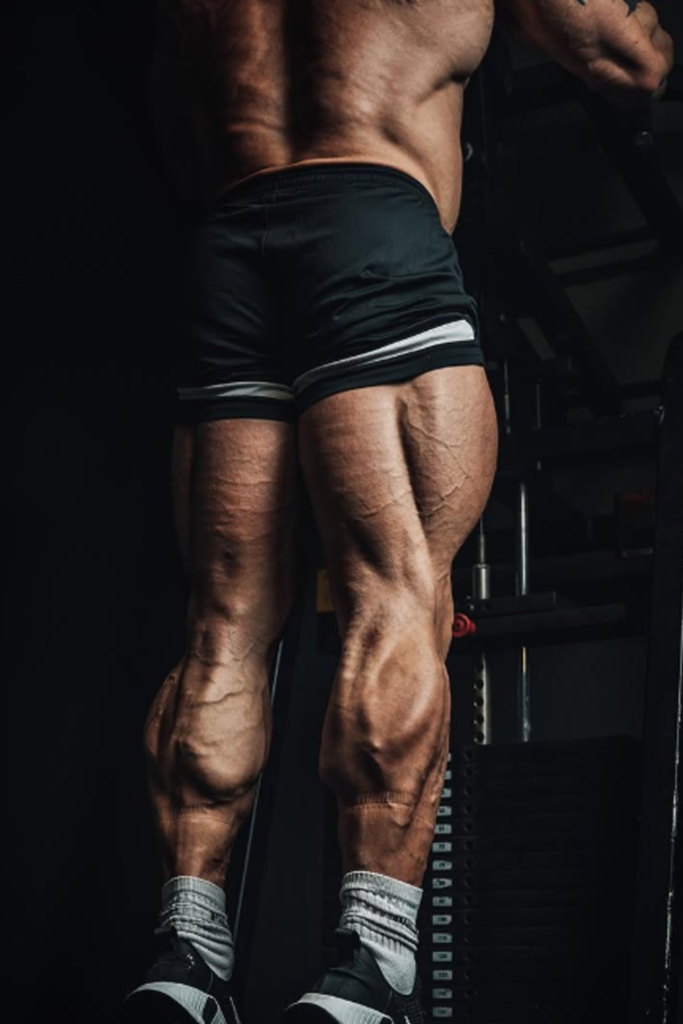
Lifters often treat all calf exercises interchangeably, jumping between standing and seated variations without understanding the fundamental biomechanical shift between the two. If your lower legs lack that distinct diamond-shaped taper below the knee, your training is likely neglecting muscle architecture.
The Gastrocnemius vs The Soleus The calf complex is primarily comprised of two distinct muscles:
- The Gastrocnemius: The upper, two-headed muscle that creates the visible, athletic diamond shape. Because it crosses both the ankle and the knee joint, it can only produce maximal mechanical force when the knee is completely extended (straight).
- The Soleus: A broad, flatter muscle lying beneath the gastrocnemius. It crosses only the ankle joint and is composed predominantly of slow-twitch, fatigue-resistant endurance fibers.
Why Seated Raises Miss the Target When you perform seated calf raises, bending your knees to 90 degrees places the gastrocnemius in a position of passive insufficiency. In this shortened state, it is virtually incapable of generating high force. Consequently, seated calf raises almost exclusively isolate the underlying soleus. While valuable for lower leg thickness, seated raises alone will never build upper calf width.
Execution for Gastrocnemius Growth To force the gastrocnemius into growth:
- Prioritize straight-leg calf variations: standing machine raises, leg press calf presses, or donkey calf raises.
- Keep knees softly locked in extension without hyperextending.
- Lower your heels into a full, deep stretch and hold for two complete seconds to dissipate tendon elasticity before driving onto the balls of your feet.
Balance both movements, but ensure straight-leg loading is your foundation for athletic lower leg aesthetics.