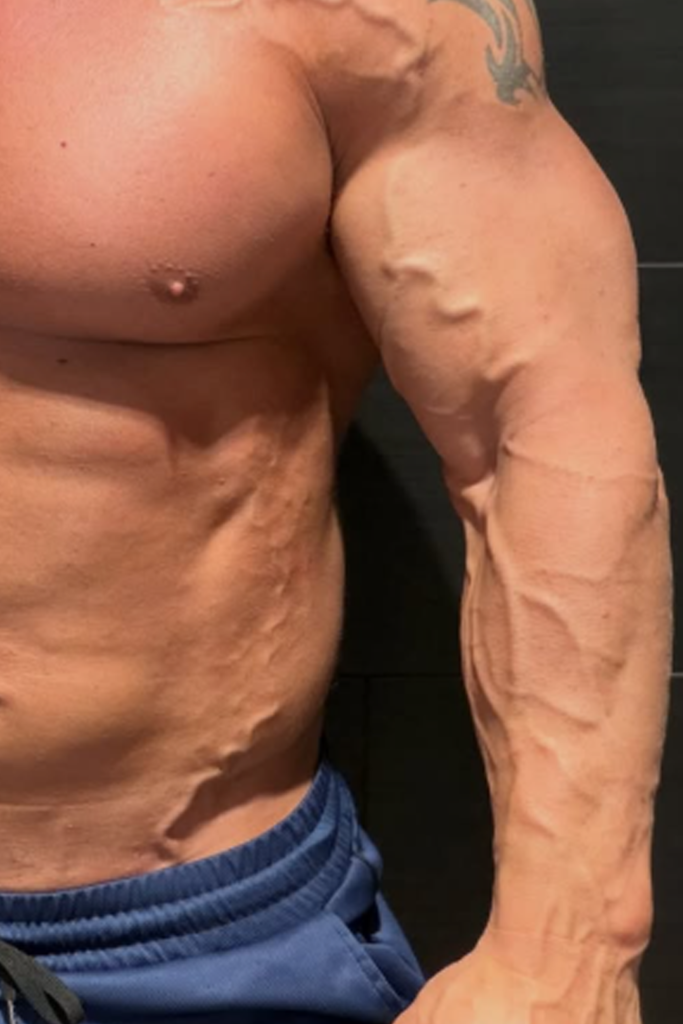
When lifters want bigger arms, the standard prescription is almost always more barbell and dumbbell curls with supinated (palms-up) wrists. However, if your arm profile looks thin from the front or lacks 3D density, the missing link is rarely the biceps brachii itself—it is the brachialis.
Anatomy of the Brachialis The brachialis sits directly underneath the lower portion of the biceps brachii and crosses only the elbow joint. Structurally, it is the strongest pure flexor of the elbow. Because it lies beneath the biceps, developing the brachialis acts like a mechanical wedge: as it expands, it literally pushes your biceps up and your triceps back, creating dramatic width and cross-sectional thickness.
Neutral and Pronated Mechanics The biceps brachii loses mechanical leverage when the forearm is pronated (palms down) or in a neutral semi-pronated position (palms facing each other). In these positions, the brachialis takes over the vast majority of the workload:
- Hammer Curls: Performing cross-body or rope hammer curls keeps mechanical tension concentrated on the brachialis while sparing the wrist tendons.
- Reverse EZ-Bar Curls: A semi-pronated grip forces deep brachialis recruitment and builds exceptional forearm density.
Programming Notes Place your brachialis work in the 8-to-12 repetition range with strict control. Avoid swinging at the hips; keep your elbows pinned to your sides and pause for a deliberate one-second peak contraction at the top of each repetition.