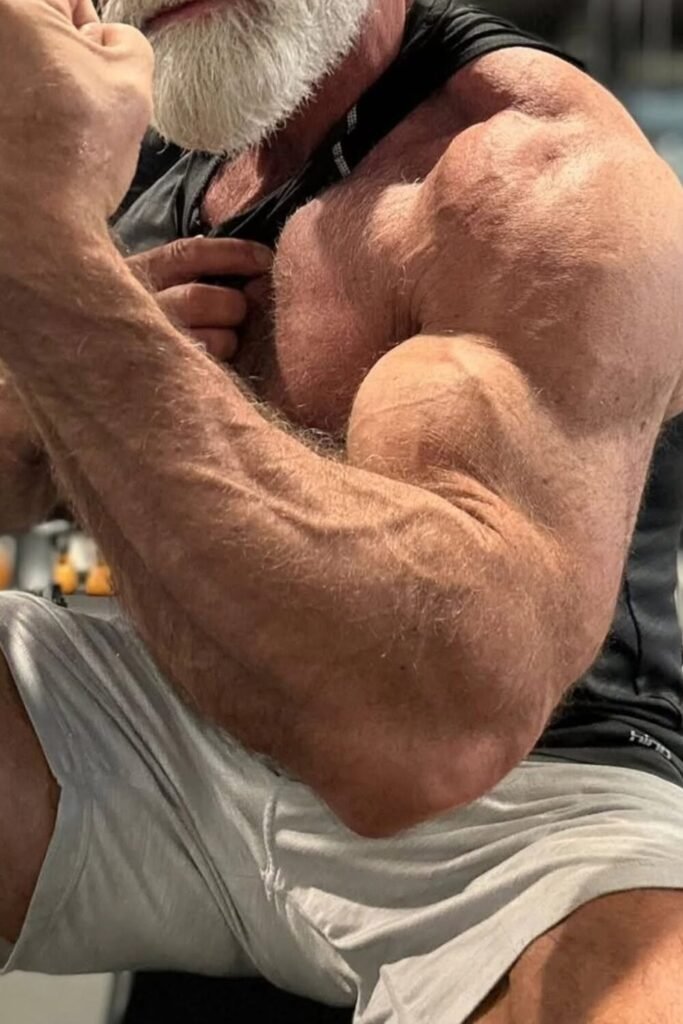
Building full, dense arms as a mature athlete requires shifting your mindset from raw weight to targeted anatomical isolation. Arm training is often viewed as simple, but optimizing biceps height, brachialis thickness, and forearm density involves specific joint angles and controlled mechanical tension.
For lifters over 40, heavy, sloppy barbell curls often do more damage to the wrists and elbows than good for the muscle. Here is how to structure a high-yield, joint-friendly arm routine that maximizes hyperophy.
1. Target the Brachialis for Arm Thickness
Most lifters focus solely on the biceps brachii, but the brachialis muscle lies underneath. When fully developed, it pushes the biceps up, creating greater arm height and separation from the triceps.
- Cross-Body Hammer Curls: Using dumbbells, curl across your torso toward the opposite chest. Keep your palms facing neutral throughout the motion.
- Reverse Barbell Curls: Using an EZ-bar, grip the handles with an overhand (pronated) grip. This heavily targets the brachioradialis and forearm flexors while removing wrist strain.
2. Isolate the Biceps Peak with Constant Cable Tension
Free-weight curls lose tension at the top of the range of motion. Cable machines provide smooth, continuous resistance that forces the muscle to contract fully at peak flexion.
- High Cable Curls: Position handles at upper-chest height on a cable crossover machine. Perform curls toward your ears, keeping your elbows stationary.
- Strict Preacher Curls: Keep your upper arms locked against the preacher pad. Lower the weight under a strict 3-second tempo, stopping just short of full elbow lockout to maintain tension on the biceps belly without overstretching the tendon.
Summary
Arm development after 40 isn’t about swinging heavy weights; it’s about precise mechanical execution. Focus on slow eccentrics, controlled peak contractions, and exercises that keep your elbows and wrists healthy for years of training.