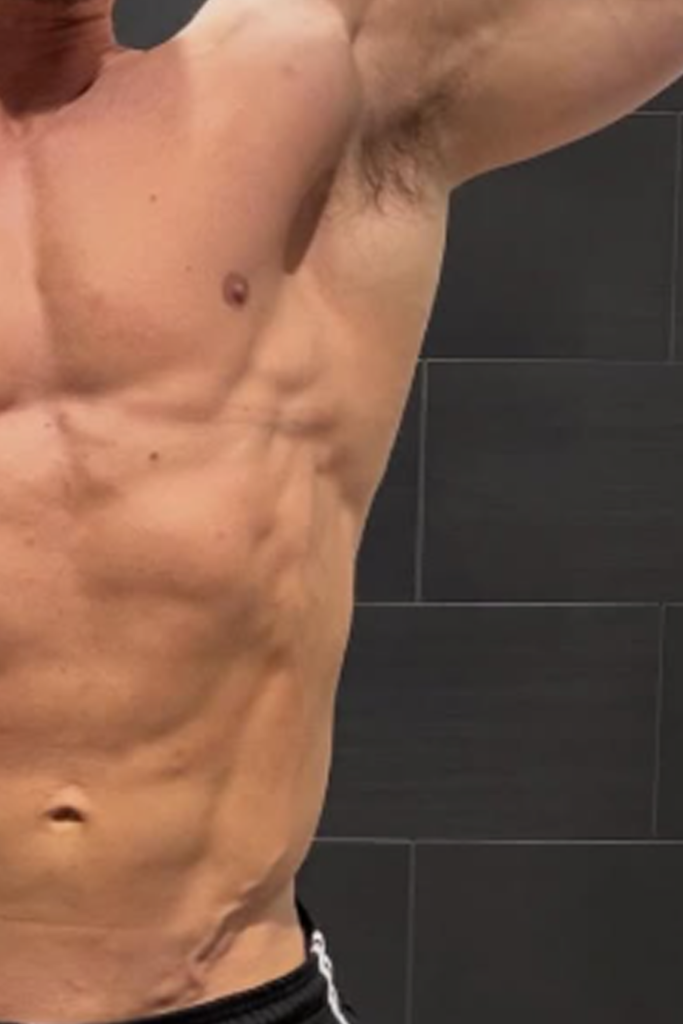
Developing a thick, full upper chest is essential for creating that powerful armor-plated torso look. Yet, standard gym equipment often misleads athletes: the majority of commercial fixed incline benches are manufactured at a steep 45-degree angle. For mature lifters, this steep slope frequently turns an upper chest press into an anterior deltoid exercise.
The Physics of the 30-Degree Angle When a bench exceeds 30 degrees of incline, the line of drive aligns more closely with the anterior deltoids than the clavicular head of the pectoralis major. By lowering an adjustable bench to roughly 30 degrees (or even 15 to 20 degrees), the angle of resistance aligns directly with the diagonal fiber orientation of the upper pecs. This subtle adjustment keeps shoulder recruitment low and chest isolation exceptionally high.
The Dumbbell Advantage Fixed barbells force your hands into a static pronated grip and dictate a rigid bar path. Dumbbells allow your wrists to adopt a semi-neutral angle (palms angled slightly inward at 45 degrees). This rotation opens up the subacromial space in the shoulder joint, completely preventing the nagging impingement that plagues veteran bench pressers.
Form Execution Checklist
- Retract and depress your scapulae into the bench pad before initiating the lift.
- Lower the dumbbells under a strict 3-second tempo until you feel a deep, controlled stretch across the collarbone area.
- Press upward and slightly inward, focusing on bringing your inner bicep toward your sternum rather than merely banging the dumbbells together at the top.
Train the upper chest where it actually activates. Lower your incline angle, grab dumbbells, and build clavicular thickness without joint wear.